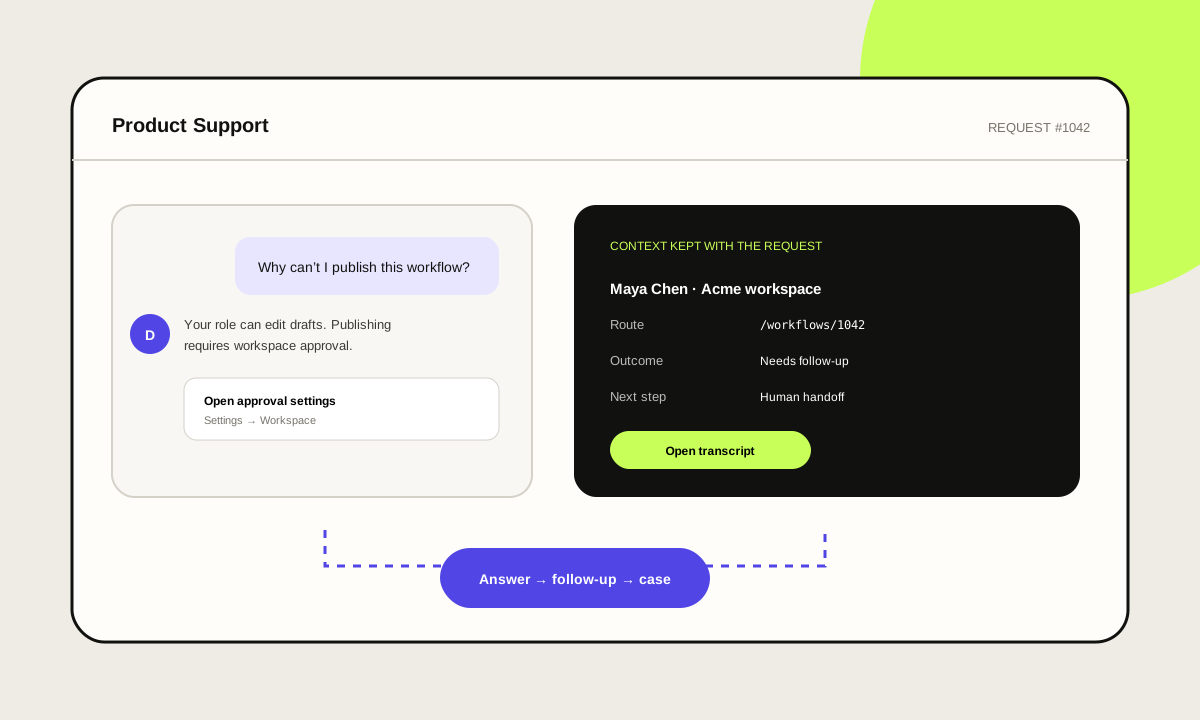
A teammate opening a customer record needs to know what changed and what to do next. A transcript can preserve the conversation, but a context note makes the relevant decision easier to find.
Use a short note attached to the relationship or opportunity. Keep the original source available so the note can be checked when wording or scope matters.
Start with what changed
Write the new information first. “The customer moved the requested kickoff to October” is more useful than “We had a good call.” If the date is only a request, say so. A note should not silently convert a preference into an agreement.
The next sentence can explain why that change matters. Perhaps the proposal needs a new delivery schedule, or a teammate must confirm availability. Include only the context needed for that decision.
Keep four pieces together
- Situation: what the customer is trying to accomplish.
- Decision: what was agreed, or what is still open.
- Source: the conversation or document behind the note.
- Next action: one owner and a clear follow-up.
| Instead of | Write |
|---|---|
| Follow up soon | Confirm availability before sending the revised proposal |
| Customer approved | Customer approved the scope; timing is still open |
| See messages | Link to the message that confirms the requested change |
Context is useful when another person can continue the work without guessing.
Use a small template
The following is a writing aid, not a special Daily import format:
Situation:
Confirmed:
Still open:
Source:
Next action / owner / due date:
Separate facts from suggestions
If an AI chat helps draft a note, compare it with the source before saving it. Label a proposed next step as a suggestion until someone accepts responsibility. Clear wording matters more than a confident tone.
Update the note when the agreement changes
Do not erase the reason for an earlier decision just to make the latest note shorter. Add the new agreement and link the previous context when it still matters. Keep sensitive details limited to people who need them.
See how Daily brings relationships and tasks together. Start with one active customer record, write a note using the four questions above, and ask a teammate whether they can identify the next action.